

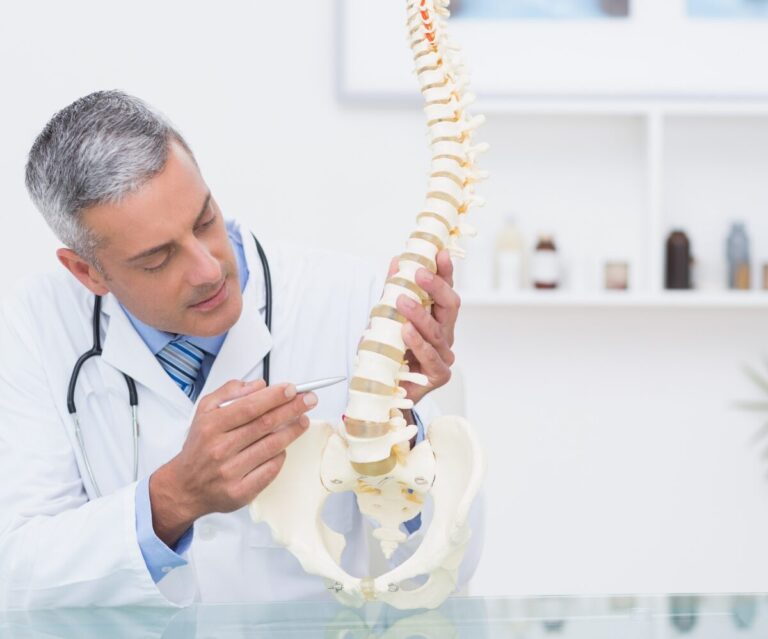
A vertebral compression fracture (VCF) is when the body of a bone in the spine, known as a vertebra, collapses and breaks. Most commonly, this is due to osteoporosis, however, it can also be due to trauma, cancer, and other causes. VCFs most commonly occur in the upper back and low back (thoracic and lumbar spines). They can be very painful – broken bones hurt!
Causes of Vertebral Compression Fractures
Compression fractures can result from a variety of conditions, including:
- Osteoporosis: This is the most common cause. Osteoporosis causes weakening of the bones throughout the entire body, including the spine. The bones in the spine can break with a ground-level fall, and also with little to no trauma, including simply bending over, or coughing.
- Trauma: A high energy injury, like a car accident, can also cause the bones in the spine to break.
- Cancer: Tumors can cause weakening of the bones, which can make them susceptible to breaking.
- Long-term Steroid Use: These medications decrease bone density and can cause osteoporosis, thereby making the bones in the spine more likely to break.
Symptoms of a Vertebral Compression Fracture
The most common symptom of a VCF is back pain. Sometimes the pain can be so severe that it is hard to get out of bed, walk, or even perform basic tasks like bathing and preparing meals.
How is a Compression Fracture Diagnosed?
Diagnosis typically involves a combination of:
- History and physical exam: To gather more information, to assess pain, and what happened leading up to the pain
- X-rays: Compression fractures can usually be diagnosed with xrays
- MRI or CT Scans: Can help better visualize the fracture and better assess if the fracture is new or old.
- Bone Density Test (DEXA Scan): This is often indicated in order to determine if there is underlying osteoporosis, although osteoporosis is typically treated by a primary care doctor or rheumatologist.
Treatment Options for Compression Fractures
Treatment usually depends on the severity of the pain.
- Non-Surgical Treatment
- Medications: Over-the-counter medications (acetaminophen, NSAIDs) or prescribed pain relievers.
- Bracing: A back brace may help immobilize the spine and reduce pain.
- Physical Therapy: Focused on strengthening the back and core muscles to support the spine, and gait training.
- Activity Modification: Limiting activities that worsen pain.
- Surgical Treatment Options
Kyphoplasty
Kyphoplasty is a minimally invasive procedure for the treatment. It involves the placement of a needle into the bone, inflating a balloon into the collapsed vertebra to restore height and make a cavity for the cement, and then injecting cement. The cement helps reduce pain, as it is thought to stabilize the fracture.
Recovery Time for Vertebral Compression Fractures
Non-Surgical Recovery
- It can take 3 months or even longer for the pain to substantially improve
Post-Kyphoplasty or Vertebroplasty Recovery
- Pain relief is often immediate or within a few days.
- Patients can usually return to normal activities within 1-2 weeks. Because it is just a needle poke, recovery is pretty quick.
- Full recovery takes 4-6 weeks, with continued improvement over time.
Risks and Complications of Compression Fractures
- Progressive spinal deformity (kyphosis)
- Chronic back pain
- Reduced lung function (due to hunched posture)
- Decreased quality of life
Risks of Kyphoplasty/Vertebroplasty
- Cement leakage
- Infection (very rare)
- Nerve injury (rare)
Compression Fracture vs Herniated Disc
These two spinal conditions often get confused. Here’s how they differ:
| Feature | Compression Fracture | Herniated Disc |
| Cause | Bone collapse | Disc rupture or bulging |
| Pain Location | Localized back pain | Radiates (e.g., leg or arm pain) |
| Treatment | Bracing, kyphoplasty | Physical therapy, surgery |
| Age Group | Common in elderly | Common in middle-aged adults |
Exercises After a Compression Fracture
Safe, Doctor approved exercises
Walking and exercises focused on improving core strength are the best activities for vertebral compression fractures. Walking improves circulation and maintains mobility, which can be very impaired. Pelvic tilts, leg raises and wall slides build lower back and abdominal strength during the recovery process. Always consult a physical therapist before starting any exercise routine.
Can You Prevent Vertebral Compression Fractures?
Yes! Here’s How:
- Maintain Good Bone Density:
- Adequate calcium and vitamin D intake
- Weight-bearing exercises (walking, dancing, light weightlifting)
- Bone-strengthening medications if indicated (for example, bisphosphonates)
- Fall Prevention:
- Install grab bars and use non-slip mats
- Improve lighting in your home
- Wear supportive shoes
- Routine Screenings:
- DEXA scans for those at risk of osteoporosis
- Annual check-ups with a spine specialist if you’ve had fractures
FAQs About Compression Fractures
1. How painful is a vertebral compression fracture?
It can be extremely painful, especially during movement. Pain often improves with rest.
2. Can a compression fracture heal on its own?
Yes, they will often heal within 8-12 weeks.
3. What is the best treatment for vertebral compression fractures?
It depends on the cause and symptoms. If the pain is mild patients may do fine with bracing and therapy. If the pain is very severe, a kyphoplasty can help to improve pain quickly.
4. Are compression fractures serious?
Yes. First, a compression fracture can be indicative of poor bone quality and osteoporosis, which increases the risk of having additional fractures in the future. Second, they can be extremely painful. If left untreated, they can lead to chronic pain, spinal deformity, and decreased quality of life.
Conclusion
Vertebral compression fractures are very common, especially in older individuals with osteoporosis. They can be extremely painful. Treatment options include pain medication, physical therapy, bracing, and if the pain is severe, a small procedure called a kyphoplasty. With treatment, the pain can improve substantially, with the goals of treatment to return to function as quickly as possible. This guide aims to answer the most commonly asked questions around this problem.
If you found this article helpful, consider subscribing to my Youtube channel for expert-backed spine health tips and updates on the latest treatments for back pain and spinal disorders.
At the Center for Bone and Joint Surgery, we serve and perform this procedure on patients across Palm Beach County and Martin County, including but not limited to West Palm Beach, Boca Raton, Boynton Beach, Delray Beach, Wellington, Royal Palm Beach, Jupiter, Palm Beach Gardens, Greenacres, and Lake Worth Beach.
Credit To: Dr. Deeptee Jain, MD

